
GOVERNMENT SERVICES
🇩🇪 Research Visa & Student Stipend
Connecting digital identity, government services, and financial support through Citizen Wallet.
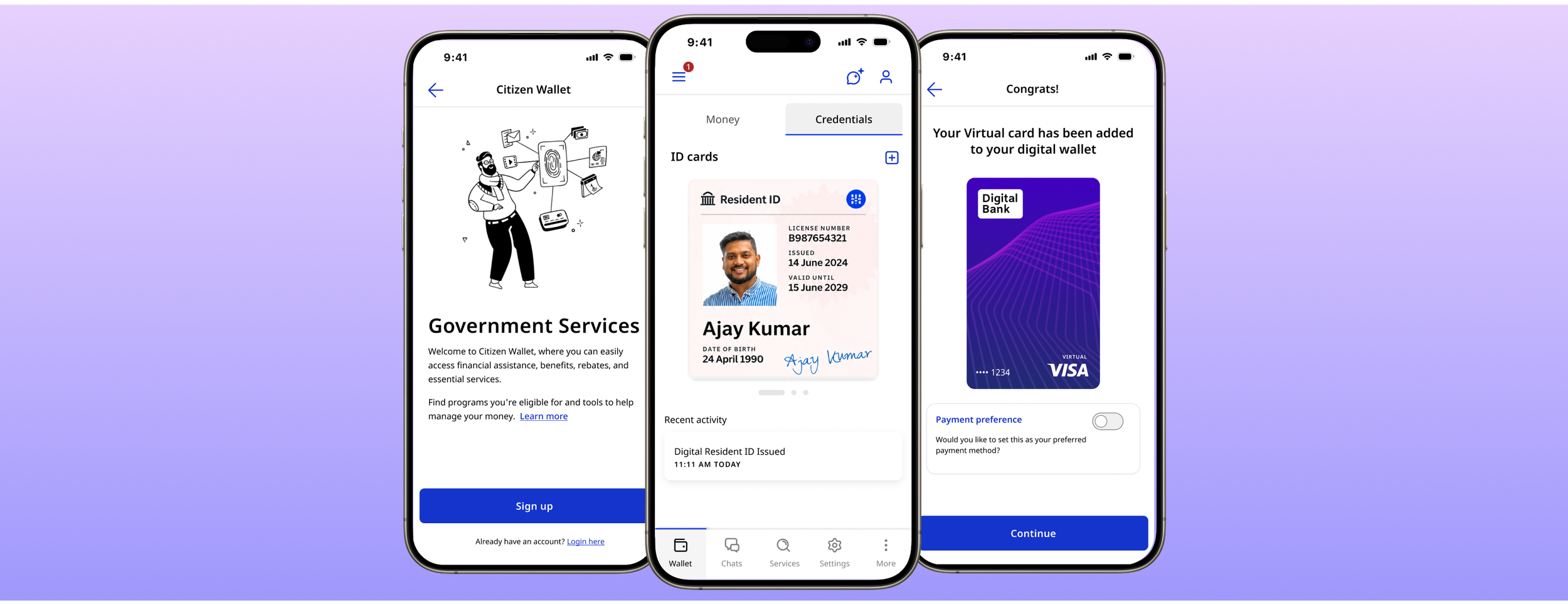
Focus: Identity • Credentials • Benefits • Payments
My role: Sr. Staff Product Designer
Partners: Solution architects · Product Pre-Sales
· Government stakeholders
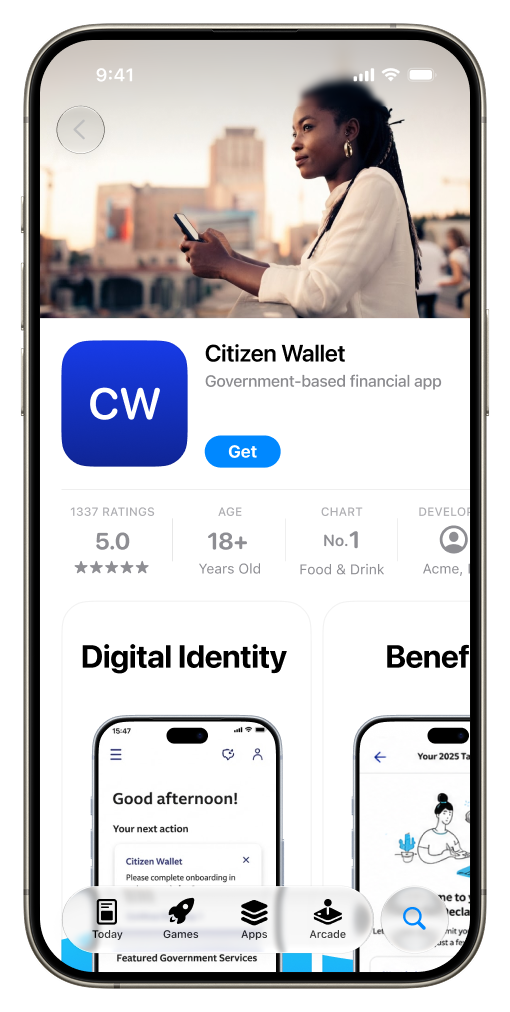
Introducing Citizen Wallet
Citizen Wallet explores how digital identity, credentials, benefits, and payments can come together in one connected experience.
Instead of repeatedly proving who they are, citizens could securely reuse verified information to access government services, with greater control over what they share.
A smoother path to government services
Accessing government services often means navigating different systems, repeatedly entering information, uploading documents, and completing multiple verification steps.
The opportunity
Bring identity, services, and payments together in one trusted experience, making it easier for citizens to access the support and services they need.
Citizen Wallet was designed around four types of interactions:
G2C
Government → Citizen
Putting money and benefits directly in citizens' hands.
C2G
Citizen → Government
Paying for civic obligations
C2B
Citizen → Business
Identity and payment trust beyond government.
P2P
Citizen → Citizen
Citizens connected directly.
Turning government use cases into real citizen journeys
I joined the initiative while the solutioning approach was already taking shape.
My focus was to understand the technology behind Citizen Wallet and translate those capabilities into experiences people could actually use.
Working closely with solution architects and product partners, I connected three perspectives:
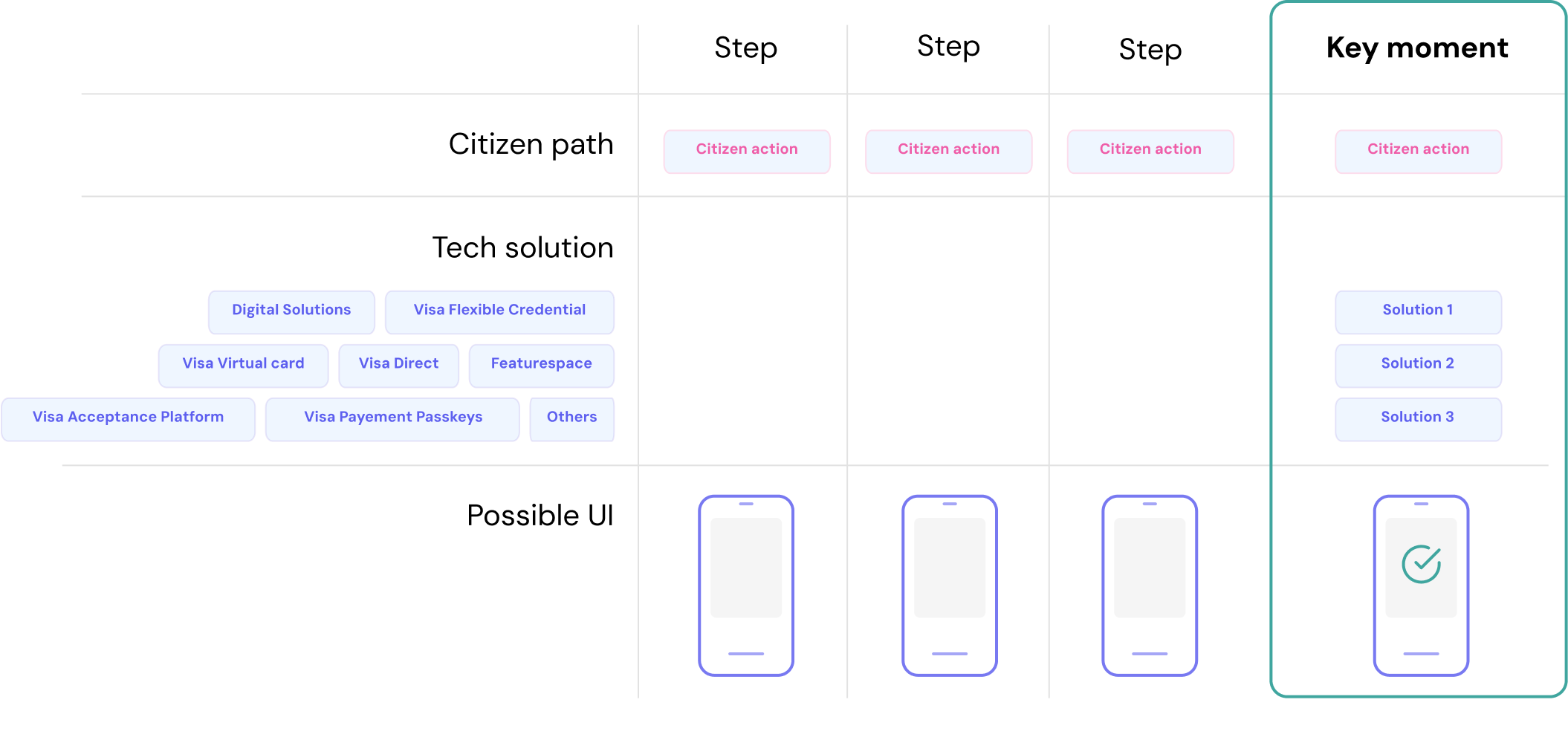
Citizen path: Understanding people's needs, actions, decisions, and desired outcomes.
Tech solution: Mapping each step to the identity, credential, payment, and Visa capabilities needed to support the journey.
Possible UI: Turning the journey into tangible flows and prototypes that teams could evaluate and refine.
Why it matters:
Bringing these perspectives together helped us explore experiences that were easier for citizens to understand while remaining grounded in what the platform could support.
Bringing the experience to life

Meet Ajay: From Research Visa to Student Stipend.
Ajay is a researcher relocating from India to Germany.
His journey illustrates how Citizen Wallet could connect services that are traditionally handled separately, from establishing residency and accessing digital credentials to receiving government financial support.
Rather than starting over with every service, Ajay could move through a more connected experience using information he had already verified.
• Establish a digital identity
• Get a residency credential
• Access a student stipend
• Receive and manage funds
The experience
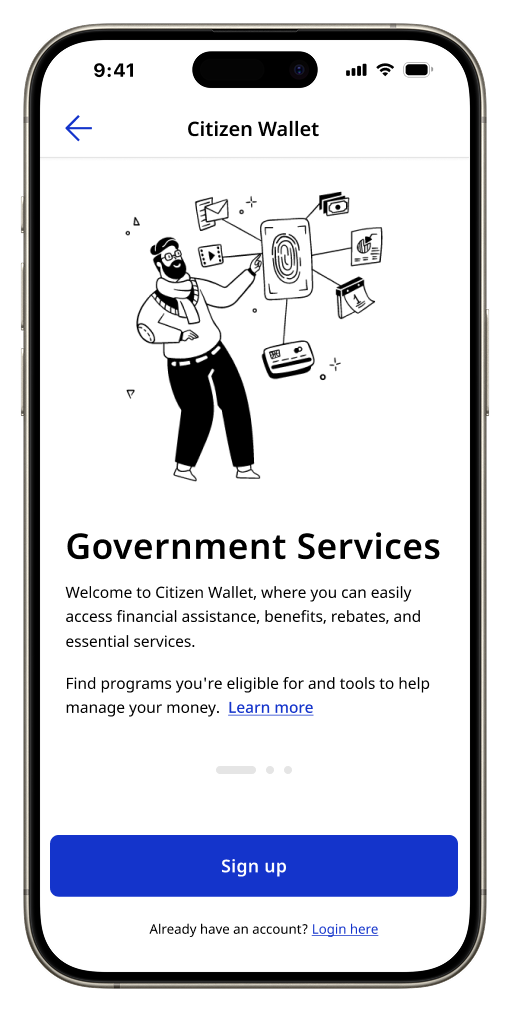
01. Getting started with Citizen Wallet
Ajay is introduced to Citizen Wallet as part of his residency journey.
Through onboarding, he can establish a secure digital identity and discover the government services available to him.
Design consideration: Make the wallet's purpose immediately understandable and help users build trust before sharing personal information.
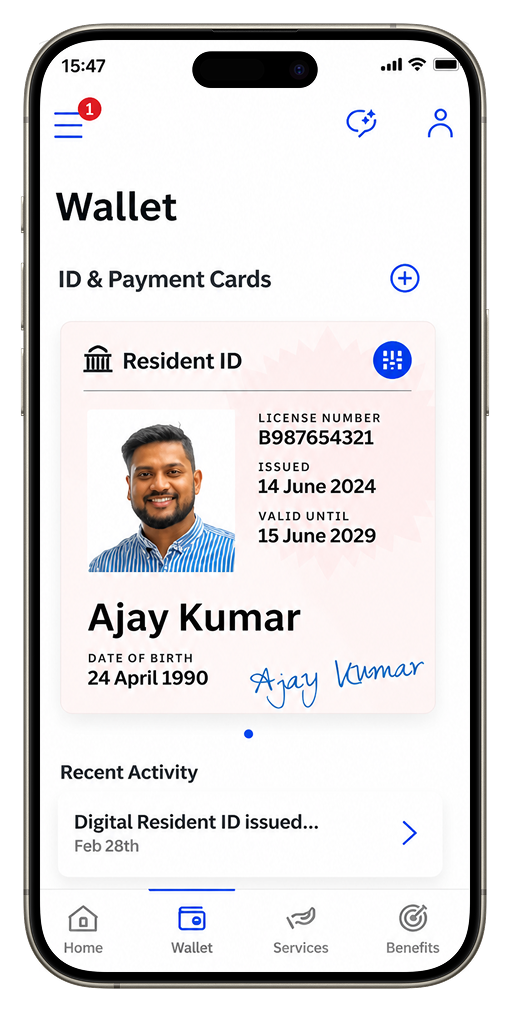
02. Establishing a digital residency credential
Once Ajay's residency is approved, his digital credential becomes available in Citizen Wallet.
This creates a trusted foundation for accessing other government services without repeatedly providing the same information.
Design consideration: Make credential status, verification, and access easy to understand.
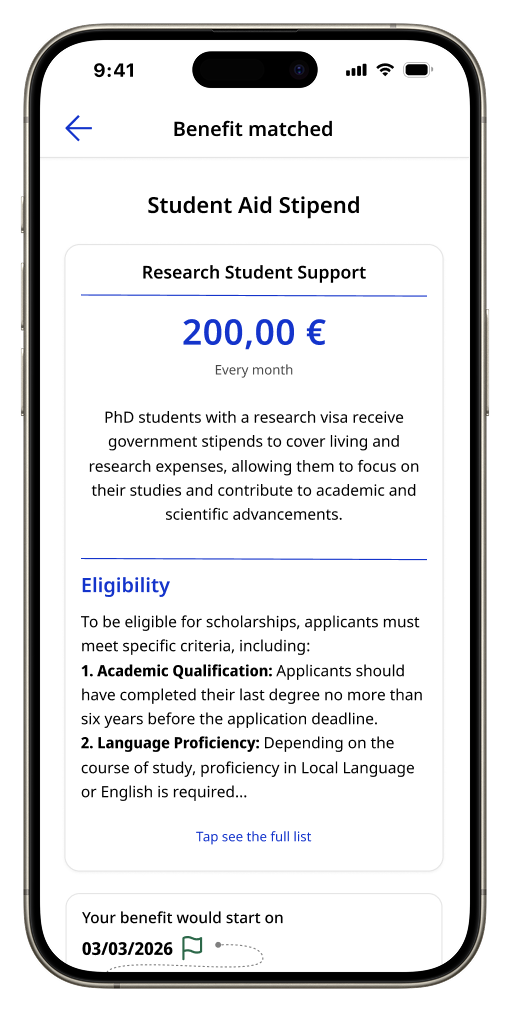
03. Discovering financial support
With his residency information already verified, Ajay receives a notification about a government stipend he may be eligible for.
He can review the benefit details and complete the necessary steps to access financial support.
Design consideration: Clearly distinguish eligibility from approval while reducing unnecessary steps and repeated information.
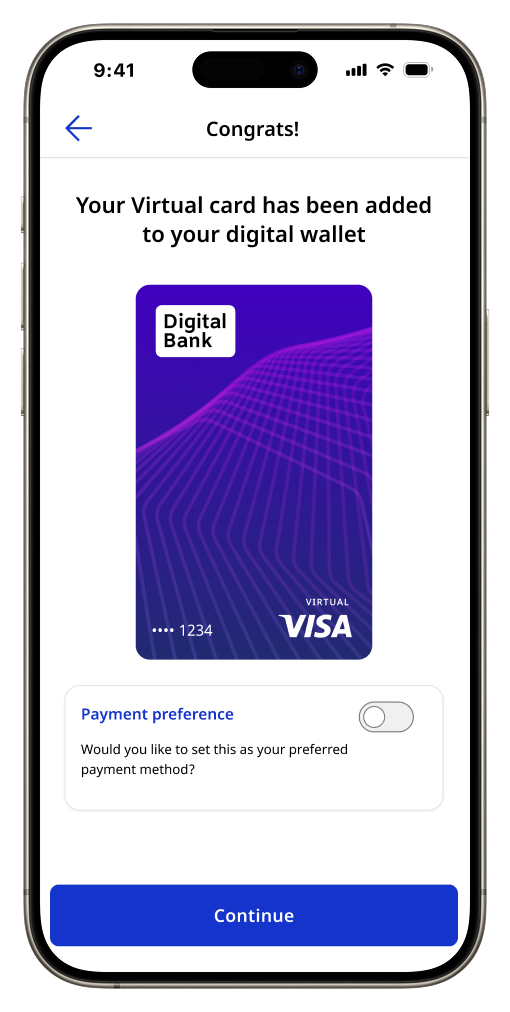
04. Receiving his Student Stipend
Once approved, Ajay receives a Visa virtual card in his digital wallet.
He can access his card details and manage the funds associated with his stipend.
Design consideration: Create a clear transition from government benefit approval to everyday financial access.
Designing for trust and continuity
Throughout the journey, I focused on how users move between services without losing context or confidence.
Some of the key experience considerations included:
Reducing repetition: Reusing verified information where appropriate and with consent.
Building trust: Explaining verification, permissions, and benefit eligibility.
Creating continuity: Connecting identity, credentials, benefits, and payments into a coherent journey.
Making complex processes approachable: Turning government requirements into clear, manageable steps.
These considerations helped shape both the citizen-facing experience and the conversations around the technical capabilities needed to support it.
From journey to interactive prototype
The journey and solution maps provided a foundation for translating the concept into interactive experiences.
Using Figma, I brought together onboarding, digital identity, residency credentials, benefit eligibility, and stipend access into a connected prototype.
This made it easier to explore how the proposed experience could work, communicate design decisions, and collaborate with product and technical partners.