GOVERNMENT SERVICES
🇻🇪 Humanitarian Wallet — From Aid to Financial Access
Helping displaced communities receive, manage, and use financial assistance through a digital wallet.
Focus: Humanitarian Assistance • Financial Inclusion • Stablecoins • Digital Payments
My role: Sr. Staff Product Designer
Partners: Solution architects • Product Pre-Sales
• Government stakeholders
From aid to financial access
As part of the Citizen Wallet initiative, this use case explores how governments could proactively reach citizens affected by natural disasters and deliver financial assistance through an existing digital wallet.
With a registered account and verified information already available, citizens could access emergency benefits without starting an entirely new onboarding process.
The opportunity
Explore how a digital wallet could simplify the process of applying for relocation assistance, receiving financial support, and accessing everyday payment services.
Exploring stablecoin disbursement
The proposed solution uses stablecoin value to distribute assistance, while presenting users with a familiar balance they can transfer, spend, or cash out.
The goal was to make the underlying payment technology less visible and the financial experience easier to understand.
From platform capabilities to citizen experiences
My focus was translating humanitarian assistance and payment capabilities into a connected, usable experience.
I explored three areas:
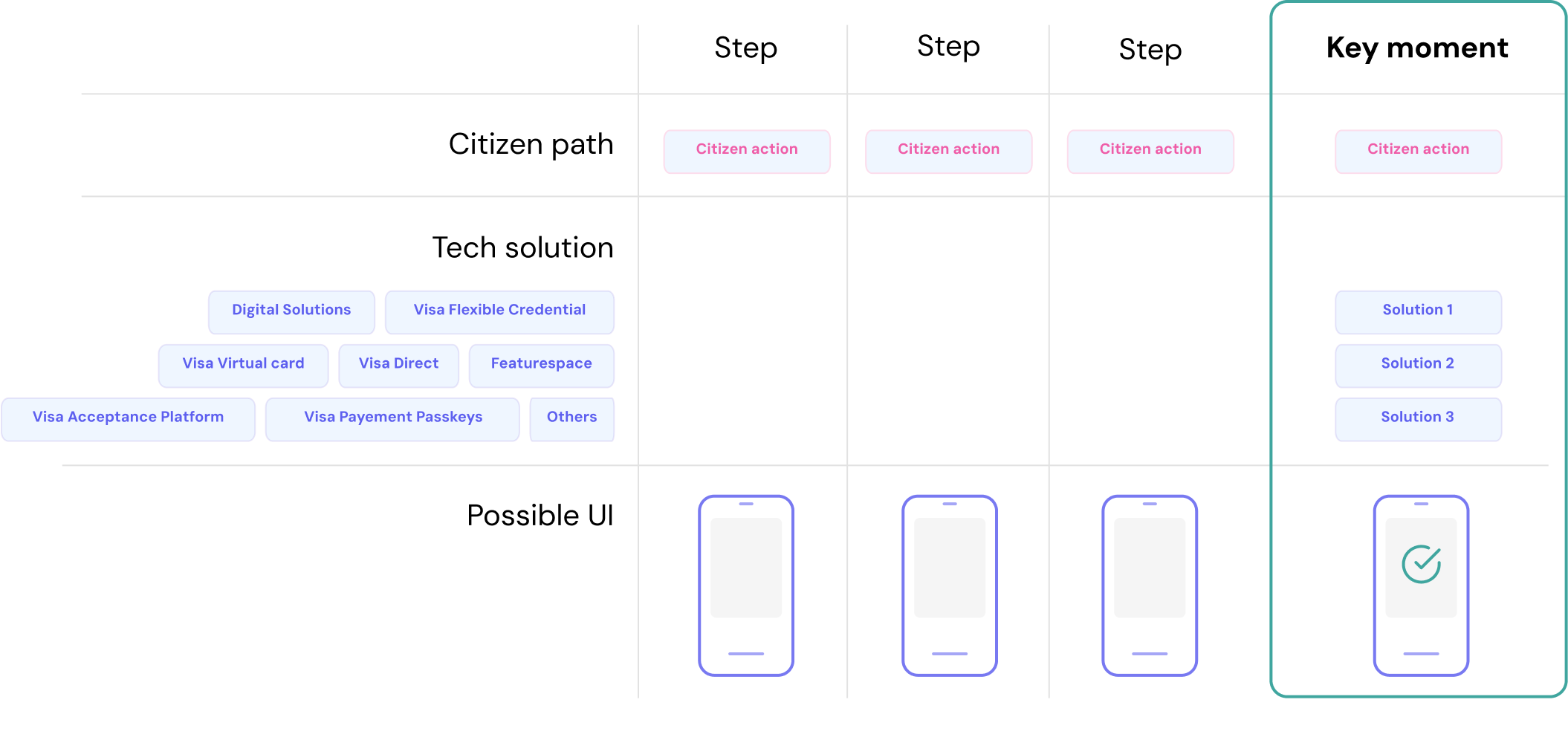
Citizen path
Understanding the journey from identity verification to receiving and using financial assistance.
Technology solution
Connecting digital identity, benefit eligibility, stablecoin disbursement, and money movement capabilities.
Possible UI
Turning the proposed journey into a functional experience using Claude Code.
Why it matters
Receiving financial support should be the beginning of financial access, not the end of the experience.
Bringing the experience to life
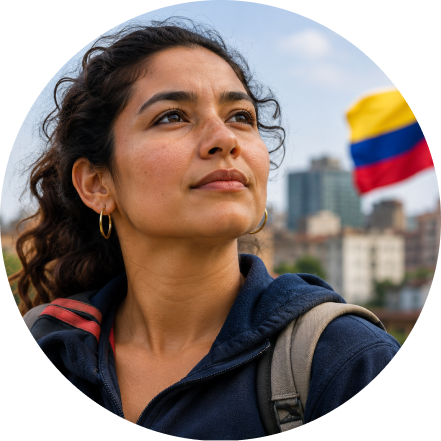
Supporting Venezuelan migrants in Colombia
The use case follows a Venezuelan migrant seeking relocation assistance after arriving in Colombia.
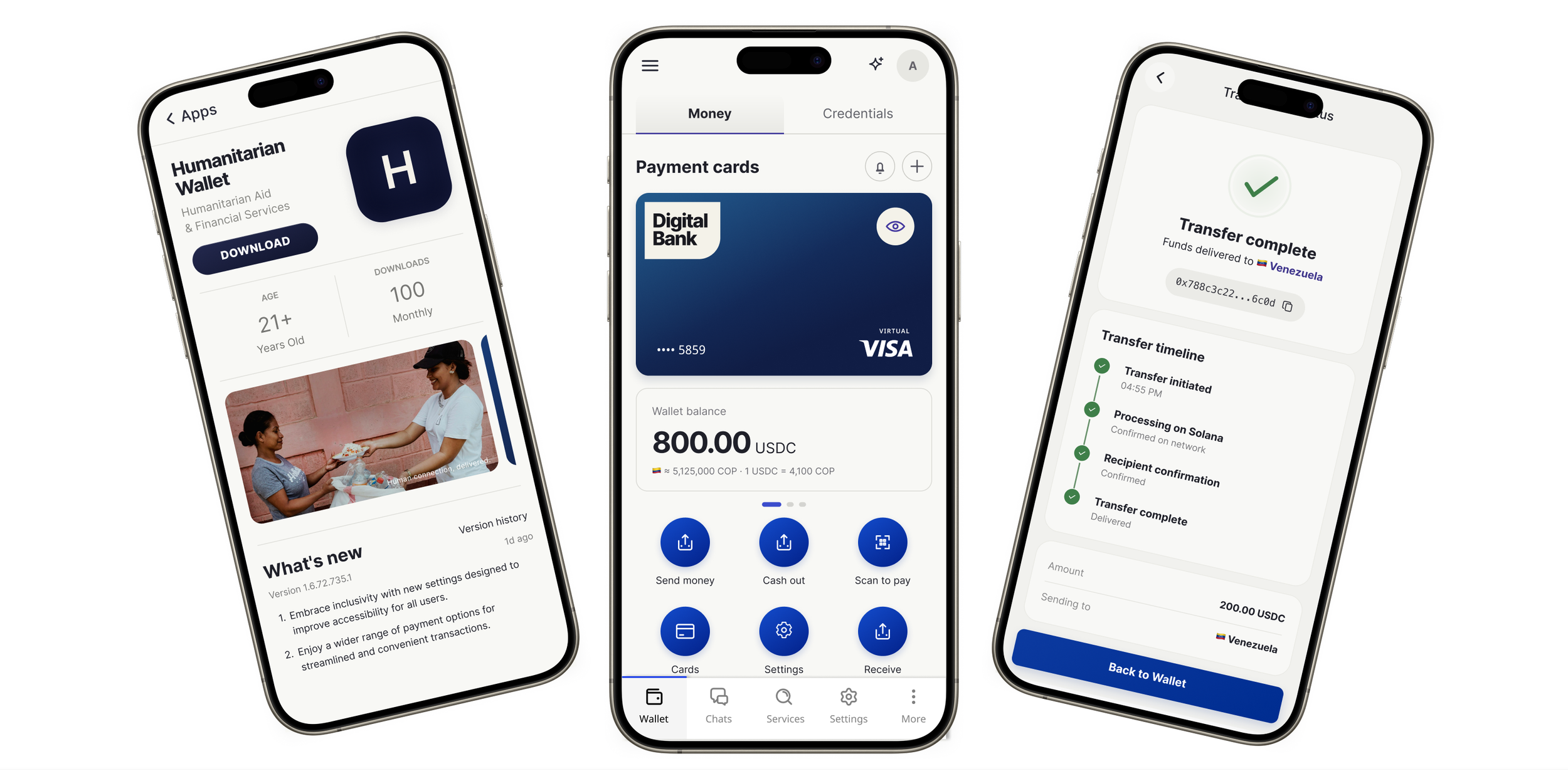
Through Humanitarian Wallet, the individual can establish a digital account, check eligibility, apply for support, and access approved funds.
The experience also explores how the wallet could support everyday financial needs, from local purchases to transfers and cash-out.
The experience

From journey to interactive prototype
Exploring AI-assisted development with Claude Code
This was my first end-to-end prototype built with Claude Code.
I used AI-assisted development to translate the service journey into a working experience, connecting onboarding, eligibility, benefit disbursement, and payment interactions.
The approach allowed me to explore interactions more quickly and experience the proposed solution beyond static interface designs.
01. Onboarding to the wallet
The user receives an invitation to access Humanitarian Wallet, creates an account, verifies their identity, and sets up biometric authentication.
Design consideration: Make account creation approachable while maintaining appropriate identity and security checks.
02. Eligibility and application
The wallet introduces available relocation assistance and guides the user through eligibility questions, application details, and submission.
Once approved, the assistance is disbursed into the wallet and displayed as an available balance.
Design consideration: Clearly communicate eligibility, benefit amounts, application progress, and payment status.
03. Using the funds
Once assistance becomes available, users can choose how to access and move their money:
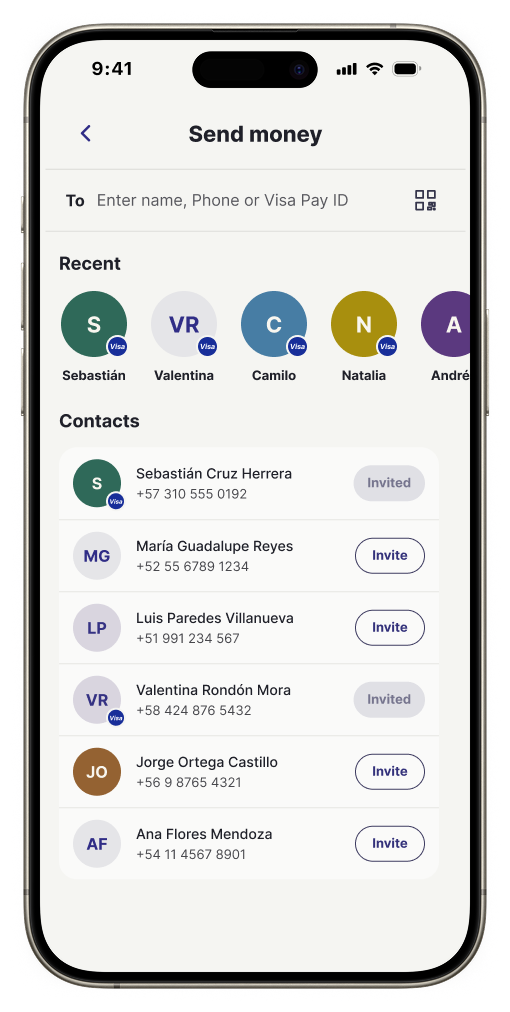
Send locally: Transfer funds to people or local entities.
Send internationally: Move funds across borders.
Cash out: Transfer value to a bank account or debit card.
Scan to pay: Make purchases in person.
Design consideration: Make different payment options understandable without requiring users to navigate the complexity of stablecoin technology.
Designing for financial access and trust
The experience focused on three priorities:
Accessibility
Simplifying identity verification, benefits, and financial services for people navigating unfamiliar systems.
Transparency
Making application status, available balances, and payment options easy to understand.
Flexibility
Giving users multiple ways to access and use their financial assistance.
These principles helped connect humanitarian aid with practical financial capabilities.
The outcome
Turning financial assistance into financial access
The proposed experience demonstrated how humanitarian benefits, digital identity, and stablecoin-enabled payments could come together in one connected wallet.
By extending the journey beyond benefit disbursement, the concept illustrated how recipients could have more flexibility in accessing and using their funds.
The project also marked an important step in my design practice, using AI-assisted development to move from experience architecture to a functional prototype.